12 min read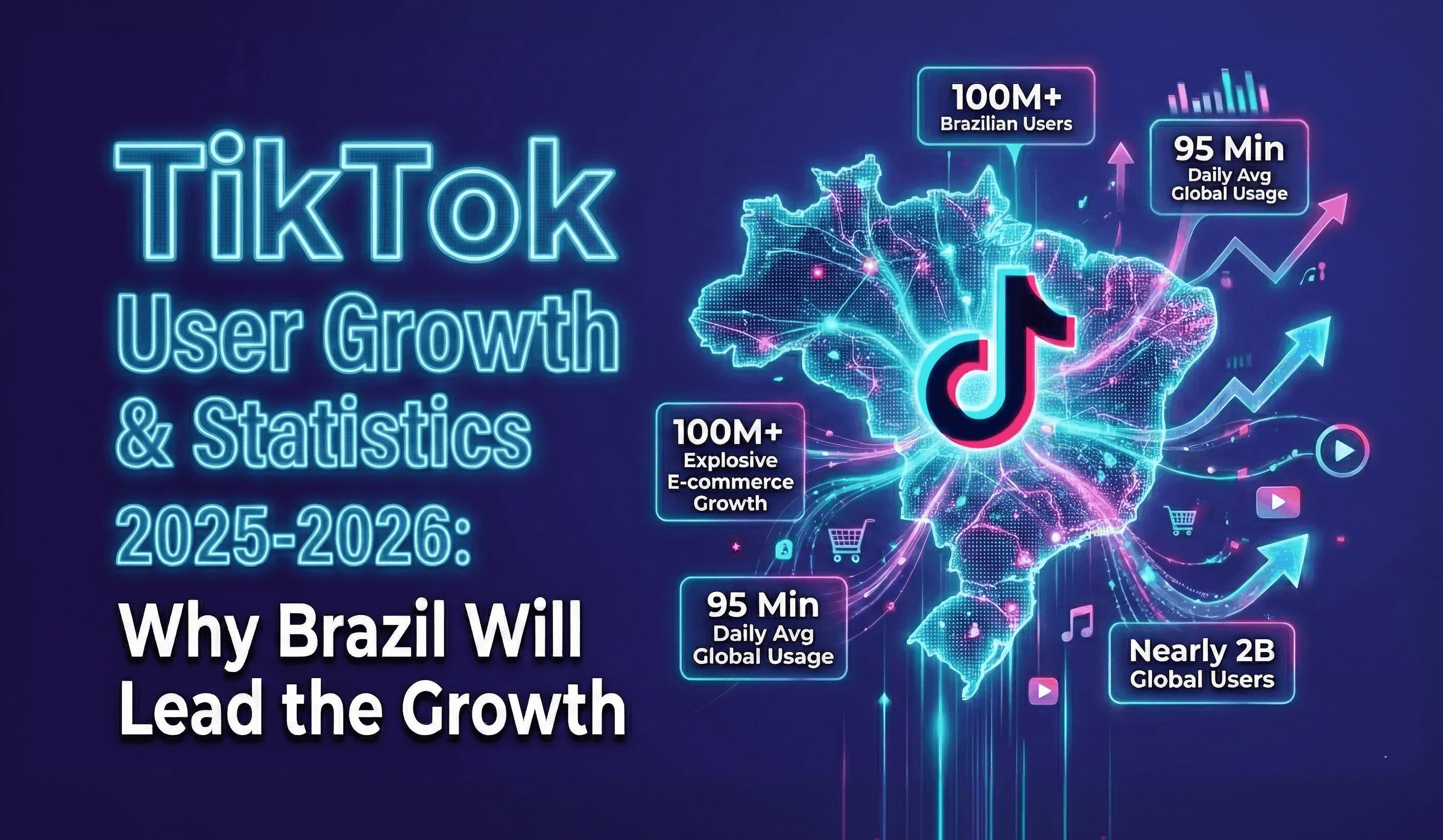
Picture this: You're at a churrascaria in São Paulo, and instead of passing the picanha, the waiter hands you a phone showing a viral dance challenge set to Funk Carioca. That's not a fever dream—it's Tuesday in Brazil circa 2025. While Silicon Valley obsesses over AI wrappers and crypto pivots, Brazil has quietly become TikTok's most fascinating laboratory: a place where algorithms meet alegria, and where short-form video isn't just entertainment—it's oxygen.
As CEO of CommentGrid, I've tracked social platforms through boom cycles and busts. But Brazil's TikTok story isn't another hypergrowth fairy tale. It's something rarer: structural maturity with explosive engagement depth. Let me show you why this market will set the global playbook for 2026 and beyond—with data that might just make your spreadsheet jealous.
From Hypergrowth to Habit: The Brazilian MAU Curve
Brazil has graduated from the "install frenzy" phase. While raw user numbers stabilized around 92 million MAUs by late 2025, the real story hides in the engagement depth. Here's how the market evolved:
| Quarter | Brazil TikTok MAU (Millions) | Market Context |
|---|---|---|
| Q2 2024 | 79.0 | Shift from web to app-native consumption |
| Q1 2025 | 91.7 | Stabilization as global top-3 market |
| Q4 2025 | 92.0 | Deep integration into daily digital routines |
| Q1 2026 (Forecast) | 94.5 | Moderate growth via regional expansion |
But stability isn't stagnation. With a DAU-to-MAU ratio hovering between 55% and 60%, more than half of Brazilians with the app open it daily. This isn't a "sometimes" app—it's woven into daily life like cafezinho. Users aren't just scrolling; they're inhabiting the For You Page.
The 95-Minute Secret: Why Brazilians Can't Look Away
Let's talk attention economics. In 2025, the average Brazilian TikTok user spent a jaw-dropping 95 minutes daily on the platform. To contextualize:
| Platform | Avg. Daily Time Spent (Brazil, 2025) | Engagement Rate |
|---|---|---|
| TikTok | 95 minutes | 3.70% (+49% YoY) |
| 62 minutes | 0.48% | |
| X (Twitter) | 30 minutes | 0.15% |
That 3.70% engagement rate—nearly eight times Instagram's—isn't accidental. TikTok's algorithm rewards authenticity over polish, a cultural match made in heaven for Brazilians who value jeitinho (creative improvisation) over sterile perfection. When your platform feels like a neighborhood boteco rather than a corporate boardroom, people stay longer. Simple as that.
Beyond Gen Z: The Great "Aging Up"
Here's where Brazil diverges from the global narrative. TikTok is no longer "that app for teenagers." The demographic maturation tells a powerful story:
| Age Group | % of User Base (2025) | Strategic Significance |
|---|---|---|
| 13–17 (Gen Alpha) | 18% | Cultural trendsetters; $28B indirect spending influence |
| 18–24 (Gen Z) | 35% | Primary engagement core; trend creators |
| 25–34 (Millennials) | 23% | Highest-value ad segment; stable purchasing power |
| 35–44 | 14% | Growing demand for financial literacy & lifestyle content |
| 45+ | 10% | Longer viewing sessions; value-based content seekers |
This multi-generational utility transforms TikTok from a trend vehicle into lifestyle infrastructure. When your aunt in Porto Alegre watches cooking tutorials and your nephew in Recife discovers new funk tracks on the same app? You've achieved digital ubiquity.
TikTok Shop: Where Pix Payments Meet Viral Commerce
Brazil's TikTok Shop story is where theory meets street-level reality. Launched in May 2025, it hit $1 million in daily GMV within months—despite Brazil's infamous "taxa das blusinhas" (blouse tax) on imports. The secret sauce? Deep integration with Pix, Brazil's instant payment system used by 85% of adults.
No more cart abandonment from credit card friction. Users see a LED projector transforming a dull room in a 15-second video, tap "Buy Now," authenticate via Pix QR code, and receive confirmation before the next video loads. This frictionless flow explains why 71% of users discover new products through TikTok, and 39% of purchases are influenced by its content.
Beauty dominates (18.65% of sales), but the real growth engine? Small businesses. Over one-third of TikTok Shop transactions come from SMEs—many run by creators who started with dance videos and now sell handmade crochet accessories across Latin America.
The Creator Economy's Silent Engine: MCN Maturation
Raw platform metrics tell one story. The creator ecosystem tells another. In 2025, Brazil witnessed a quiet explosion in specialized MCNs focused exclusively on TikTok verticals. Firms like Social Blue and Influu shifted from generic "influencer management" to hyper-specialized services: algorithmic trend forecasting, TikTok Shop catalog optimization, and cross-border audience expansion into Portugal and Angola.
Why does this matter? MCN density is a leading indicator of ecosystem maturity. When infrastructure exists to professionalize creation—not just for celebrities but for padeiros demonstrating pão de queijo recipes—you've moved beyond novelty into sustainable economy. These MCNs aren't just scaling creators; they're scaling trust, which fuels the engagement flywheel.
Cultural Jet Fuel: When Brazil's Beats Go Global
Let's end where Brazil began: culture. Eight out of ten Billboard #1 hits in Brazil went viral on TikTok first in 2025. But the real magic is reverse cultural osmosis. Tracks like MC Poze's "To Voando Alto" didn't just dominate Brazilian feeds—they sparked dance challenges from Lisbon to Luanda.
Brazilian artists mastered "algorithmic synchronicity": Funk Carioca's 150 BPM energy and Sertanejo's emotive storytelling fit TikTok's attention architecture like a chave na fechadura (key in a lock). Regional creators now use TikTok's analytics to discover unexpected audiences—like a forró artist finding fans in Marseille through geo-targeted sounds.
When your local culture becomes global currency, retention becomes inevitable. Why would users leave a platform that simultaneously celebrates their identity and exports it worldwide?
The Infrastructure Moat: 5G and the Pecém Data Center
None of this works without backbone. Brazil's 5G rollout transformed mobile experience: median download speeds jumped from 47.09 Mbps in early 2024 to 239.43 Mbps by late 2025. But ByteDance's $37 billion investment in the Pecém Data Center in Ceará—the first Latin American facility designed for AI-ready liquid cooling—was the masterstroke.
This isn't just about speed. It's about sovereignty. By anchoring data infrastructure locally, TikTok aligned with Brazil's "tech sovereignty" ambitions while building a regulatory moat competitors can't easily replicate. When your servers sit 500km from your largest user base instead of 10,000km away? Latency vanishes. Live shopping events flow seamlessly. AR filters render instantly.
The Bottom Line: Brazil as Blueprint
So why will Brazil lead TikTok's global growth in 2026? Not because of user count (it's already #3 globally after the U.S. and Indonesia). But because it demonstrates what happens when a platform achieves cultural symbiosis:
- Engagement depth > raw user growth
- Multi-generational utility > youth novelty
- Localized commerce > generic shopping carts
- Cultural export > passive consumption
- Infrastructure sovereignty > offshore dependency
By Q1 2026, Brazil's TikTok penetration is projected to hit 51.1% of internet users—approaching 70% in urban centers. But the real metric that matters? That 95-minute daily session where a teenager discovers a new funk track, her mother buys skincare via Pix, and her grandfather learns stock tips—all within the same app.
That's not just growth. That's digital life, perfected. And the rest of the world is taking notes.
Analyze TikTok Comments From Fast-Growing Markets
Brazil's TikTok growth is not just about views. The real signal is in the comments: product questions, regional slang, creator feedback, and early purchase intent. With CommentGrid's TikTok Comment Exporter, you can download TikTok comments as CSV, Excel, or JSON and turn that audience chatter into market research.
 M
MMarshall Sun
Building CommentGrid to decode social conversations. Exploring the signal within the noise of the global social web.